Sunday, January 9, 2011

Winter: Cold, Snow, Ice, Sleet, Hail, Rain, Sun - Fun!

The title of this blog perfectly describes the many weather patterns that occur during the winter time, yes at times, even in the same day! I love it! I am not alone in this feeling of unrestrained joy. There are some bloggers among us who at the sight of the first snow flake emit a gleeful smile and a jubilant cry of ecstasy, then their are others who just say "oh no not again, yuck"! Not me, I say bring it on. To me it's a beautiful gift from Jehovah, and Jehovah is so kind, he pleases everyone. Also, remember winter is with us only about 3 months, so enjoy it while it is here.

What kind of things can you do that are fun? Take a look at this beautiful Currier and Ives scene of people skating in Central Park.


You sure can't do that in the
summertime.

What about skiing, or snowboarding? That's exciting, and you need the wintertime and the snow to do it.
Also, think about this. How could we ever make snowmen without the snow? Snowmen fall from heaven unassembled. It's our job to put them together, especially with our children and grandchildren. Think about all the fun, and memories that brings.


It's not just humans who take delight in this time of year but also the animals. Seeing them frolicking in the snow underscores Jehovah's happy, humorous personality.


Isn't he the cutest? Now do you like winter? He sure looks like he's having fun.


This looks like Romeo. Look how much fun he's
having. I think he hears Sparrow calling him to come into the house. He's saying "just five more minutes, I'm trying to catch that squirrel"?


I must admit there are times in the winter that can be challenging, like scraping the ice off of the car.


Much could be said about the inconveniences of winter, of the cold and ice, of the frost and snow. Winter often reminds one of spinning car wheels caught in slippery ruts, of grinding engines that are slow to start, if they start at all in sub-zero temperatures. Perhaps you think of the hurried pace through slush and sleet, of freezing fingers, ears and feet.

But, I prefer to think of this time of year as a time of beauty and fun, doing things you can't do or enjoy at any other time of the year, like sleigh riding down a big snowy hill, or shaping a snowman or two, especially with young ones. Skating on frozen ponds. Skiing down powder like slopes. The simple pleasure of stepping on thin frozen ice formed on the road, or driveway, just to hear it crackling under your feet. A walk in the quiet, snow laden woods, meditating on the beauty of God's creation. Reading a book next to a blazing fireplace either alone, or better yet, with a young child. There is nothing better than coming home from being out in the ministry, feeling cold, putting on the fireplace, making a cup of hot chocolate, looking out of my picture window at the breathtaking grandeur of the soft, crystal white blanket of snow.

A picture is worth a thousand words.


Well, I could go on, but I won't. I have to save some things to say for the next blog.

For those who are not crazy about the winter, I do hope I have encourage you to think differently about it. After all, it is a gift to us from Jehovah, and we will have it forever.

Genesis 8:22: “For all the days the earth continues, seed sowing and harvest, and cold and heat, and summer and winter, and day and night, will never cease" I am so happy!!!!

This is Raven-as the crow flies

Saturday, January 1, 2011

January 1st, 2011

January, "There is nothing in the world more beautiful than the forest clothed to its very hollows in snow. It is the still ecstasy of nature, wherein every spray, every blade of grass, every spire of reed, every intricacy of twig, is clad with radiance."- William Sharp

January, the beginning of the new year and a time when many make New Year resolutions.

January was established as the first month of the year by the Roman calandar. It was named after the god Janus (Latin word for door). Janus had two faces which allowed him to look both backwards into the old year and forwards into the new one at the same time. He was the 'spirit of the opening'. This symbolism can easily be associated with the month known by many as the start of a new year which brings new opportunities. We cast out the old and welcome in the new. It is the time when many reflect on events of the previous year and often resolve to redress or improve some aspect of daily life or personal philosophy."

In the very earliest Roman calandar there were no months of January or February at all. The ancient Roman calandar had only 10 months and the new year started the year on March 1st. To the Romans 10 was a very important number. Even when January (or Januarius as the Romans called it) was added, The New Year continued to start in March. It remained so in England and her colonies until 200 years ago.

The Anglo-Saxons called the first month Wolf monath because wolves came into the villages in winter in search for food.

"In order to set the calendar right, the Roman senate, in 153 BC, declared January 1st to be the beginning of the new year. During the Middle Ages, the Church remained opposed to celebrating New Year's Day. January 1st has been celebrated as a holiday by Western nations for only about the past 400 years."

In the northern half of the world, January is usually the coldest month of the year.Nature is quiet. Birds travel less, and such animals as bears and woodchucks sleep both day andnight. Plants rest in preparation for the next growing season. In the southern half of the world, January is usually the warmest month of the year. Plants grow and animals are active.

This time of year has a beauty all it's own. Take the time to enjoy it. Don't wait until tomorrow, because tomorrow may never come. This is a good time to share with you a beautiful poem relating to this thought. I hope you will enjoy it.

This Moment:

I may never see tomorrow; there's no written guarantee,

And things that happened yesterday belong to history.

I cannot predict the future, and I cannot change the past.

I have just the present moment; I must treat it as my last.


I must use this moment wisely for it soon will pass away,

And be lost to me forever as a part of yesterday.

I must exercise compassion, help the fallen to their feet,

Be a friend unto the friendless, make an empty life complete.


I must make this moment precious for it will not come again,

And I can never be content with things that might have been.

Kind words I fail to say this day may ever be unsaid,

For I know not how short may be the path that lies ahead.


The unkind things I do today may never be undone,

And friendships that I fail to win may nevermore be won.

I may not have another chance on bended knee to pray,

And thank my God with humble heart for giving me this day.


I may never see tomorrow, but this moment is my own.

It's mine to use or cast aside; the choice is mine, alone.

I have just this precious moment in the sunlight of today,

Where the dawning of tomorrow meets the dusk of yesterday.


-Paul F. Barnett


Especially, may we use this time, this moment, to be busy in spiritual activity. Since this is a new year perhaps we can encourage our neighbors who are making New Year resolutions to think about studying the Bible.


May we too set spiritual goals that will draw us closer to Jehovah, and to one another, and that will help us maintain our joy in serving him.


January, a time of beauty, a Currier and Ives scene, a time of serene peacfulness and delightful memories, that only winter can bring.

This is Raven-as the crow flies!


Friday, December 24, 2010

Old Crow Is Now A Falcon!

This blog is to alert all my blogging buddies of the new pseudonym "Falcon" (alias Tom) has chosen for himself. I must confess, I was the one who affectionatley named him "Old Crow", because of my fondness for Crows, but out of respect for his preference I conceded to his new blogging name "Falcon". Welcome Falcon! Forgive me Falcon, if I slip a few times and call you Crow, my brain has to get adjusted to this dramatic change.

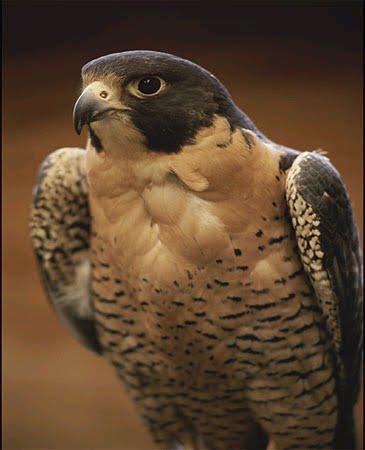
Falcon has chosen wisely his new name. I did some research on Falcon's and want to share their impressive characteristics. Here's what I found.

FALCON FACTS

Peregrines adapt to their environment and live on every continent except Antarctica. They can live in the mountains, deserts, forests, on sea cliffs, in cities and large urban areas. They mate for life and return to the same nesting site every year. They are known to have substituted tall sky scrapers in downtown urban areas for nesting sites on cliffs.

A bit of trivia: While several states have adopted the cardinal, mocking bird, chickadee, and bluebird,no state has a falcon as its state bird.


GENERAL CHARACTERISTICS

Falcon's scientific name comes from the Latin word, "Falco Peregrinus" which means wandering falcon, traveler, or foreigner.

Also, the name falcon is derived from the Latin word falco meaning hook shaped and refers to the animal’s beak and claws. Falcons typically hunt small birds and they use their beaks and claws to swiftly immobilize and kill their prey while in flight.

There are 39 species of falcon - the Peregrine is one of five commonly found in Canada. There are 3 subspecies of Peregrines ~ American, Artic and Peale's.

5 types of falcons live in the U.S. ~ gyrfalcon, peregrine, merlin, American kestrel, and prairie falcon.

Peregrines are the most well known of the falcons.

Some like to migrate south to Latin America in the winter. They can migrate as far as 10,000 miles ~ farther than other birds.
Peregrines can live up to 17 years.

The female is called a falcon, the male is called a tiercel.

They vary in size depending on where they live ~ the biggest are in Alaska.

Their wings are thin and pointed, and span about 40 inches.

Slim birds with a small head. The male is about 1/3 the size of the female. Their bodies average 15 - 21 inches long and weigh about 2 pounds. The female will weigh about 10.6 ounces more than the male.

Adult Peregrines have blue-gray wings, backs, and heads, with white undersides marked with black bars going across the chest. There faces are white under their chin. They have large, dark eyes and very sharp beaks and yellow talons (feet).

Peregrines make a "kek-kek-kek" noise, especially when angry or aggressive.

They have very good eye sight ~ they can spot a meal up to a mile away.

They are raptors (Latin meaning "to seize") - birds of prey / carnivores - and eat other birds ~ sparrows, starlings, gulls, ducks, and their favorite, pigeons. In fact, during WWII they were often shot in England to keep them from eating the pigeons that were carrying important messages to the forces.

Falcons are the swiftest birds of prey and are very muscular. In level flight the travel about 50 kilometers (31 miles) an hour. In a dive, called a "stoop" they reach speeds over 300 kilometers (186.33 miles) an hour! Generally speaking, the higher the Peregrine falcon is in reference to it prey, the faster speeds it can attain during its pursuit the higher the probability of a successful capture.

They have a unique way of hunting for food ~ they dive at their prey so fast that they overtake it by surprise, catching it in mid-air, and the speed kills the prey instantly. They are diurnal - they hunt during the day. The capture takes less than 2 minutes!

An adult eats about 70 grams (2 1/4 oz.) of food a day ~ that equals about 2 blackbirds. For the most part, peregrine falcons do not build nests.
Occasionally they will use nests that have already been built, but they tend to dig simple depressions out of the soil on cliff sides. This cuts down on energy expenditures and maintains an adequate energy reserve for hunting.

In the city it has been observed that falcons don't like to land on the ground ~ even if their meal falls to the ground, they won't go get it. In fact, they don't usually fly lower than the level of their nest.

The peregrine falcon has also developed a proclivity towards city life. The tall buildings provide excellent opportunities to perch and the abundance of overweight pigeons provide a huge amount of biomass to feed off of. It makes the peregrines’ life a lot easier and it cuts down on city pests.

They are at the top of the food chain, so adult peregrines have no natural predators. They do however, face many threats from humans ~ use of pesticides, altering of landscape and habitats, egg collecting, hunting, and taking of the young for falconry. Baby falcons (eyases) are a tasty meal for owls, racoons, and mountail cats.


Interaction with Humans

The interactions between the peregrine falcon and man are primarily positive interactions for both parties. The peregrine falcon serves as a pest controller on farms and airports.

Falcon handlers train and use falcons to keep problematic bird species at airports under control. When released, the peregrine falcon peruses and kills birds that could get caught in and damage aircraft engines. Over time, the problematic bird species will stay out of the falcon’s established territory.
In recent years, the falcon is being replaced by specially designed sirens. On farms, peregrine falcons keep small rodent and bird populations in check. [1] This in turn maintains crop and livestock viability and reduces losses for the farm.

So you can see how regal and valuable Falcons are. Good characteristics, like you Tom. You chose wisely.

Alas though, someone has to be a Crow, so now I have given that name to my dear husband Russell. He was going to be "Darling Starling", but my heart is with Crow. What do you think Russell? Only the Raven knows, and soon you will too.

This is Raven-as the crow flies!

Monday, December 20, 2010

December 21st - The First Day Of Winter

Yes, winter is upon us! Today is the Winter Solstice and the first day of winter in the Northern Hemisphere.

The Winter Solstice marks the beginning of winter and it is the shortest day of the year and the longest night of the year. Therefore the first day of winter has the least amount of sunlight.

The good news is while the days keep getting shorter and the nights longer, once winter arrives the days will slowly get longer and the nights slowly get shorter again and before you know it---- spring, and then summer! But first the snow.

The Earth is actually nearer the sun in January than it is in June -- by three million miles. Pretty much irrelevant to our planet. What causes the seasons is something completely different. The Earth leans slightly on its axis like a spinning top frozen in one off-kilter position. Astronomers have even pinpointed the precise angle of the tilt. It's 23 degrees and 27 minutes off the perpendicular to the plane of orbit. This planetary pose is what causes all the variety of our climate; all the drama and poetry of our seasons, since it determines how many hours and minutes each hemisphere receives precious sunlight.

Do you remember what Solstice means? Solstice means...standing-still-sun. Such precision we have about it now! Winter solstice is when......because of the earth's tilt, your hemisphere is leaning farthest away from the sun, and therefore:The daylight is the shortest. The sun has its lowest arc in the sky.

When it's winter solstice in the Northern Hemisphere, the sun is directly overhead at noon only along the Tropic of Capricorn, on which lie such places as Sao Paulo, Brazil, southern Madagascar, and areas north of Brisbane, Australia.

But something else happens this year! The winter solstice is even more significant because it coincides with a total lunar eclipse for the first time since 1638. So it has been more than 350 years since this has happened!

Tuesday's eclipse will begin at 1:33 a.m. and will continue through 5:01 a.m., so you'll have to stay up late or get up early.

Roughly 3:15 a.m. will be the best time to view the eclipse. When at its peak, the moon will display the most brilliant shade of coppery red.

And will we have great conditions for viewing it? Not sure? If not, hopefully we can get a look at it on the news.

So welcome the winter. Enjoy the beauty that only it can bring.


This is Raven-as the crow flies!

Tuesday, December 14, 2010

Jack Frost - A Pleasant Childhood Memory!

This time of year brings me back to my childhood days especially when I see frost on the window panes as well as the trees and lawn."Jack Frost was here last night", my mom would cheerfully call out. We would run with gleefull anticipation to see his icy handiwork. We never saw Jack Frost, but we did see the evidence that he was there-or was he? Who was this legendary character Jack Frost? Was he real or just a figment of the imagination. As the crow flies, I went straight to the books to find out about this pleasant childhood memory, Jack Frost. According to the American Heritage Dictionary: Jack Frost is frost or cold weather personified.
-
Also according to Wikipedia, in British Isles folklore, Jack Frost appears as an elfish creature who personifies crisp, cold, winter weather, a variant of Father Winter (also known as "Old Man Winter"). Some believe this representation originated in Germanic Folklore specifically in the Anglo-Saxon and Norse winter customs.

Tradition holds Jack Frost responsible for leaving frosty crystal patterns on windows on cold mornings(window frost or fern frost).
Old Man Winter like the elfish creature Jack Frost is a personification of winter, sometimes also called Father Winter. He may be an alternative older name for Father Christmas and has been identified with theOld English god Woden.
In Russian folklore, Old Man Winter is also identified with Ded Morozel the Russian Santa Claus.
Old Man Winter is also used in many poems.
In my heart of hearts I knew he wasn't real, but now I know for sure who he is, and where he came from.

I also check out the Watchtower library on "Jack Frost", and low and behold they had a very interesting article.
-
*** Autumn Leaves Bow Out in a Blaze of Glory *** (g87 9/22 pp. 16-18)
-
It starts out by saying, "JACK FROST gets credit for it, but he has nothing to do with it.
-
The leaves do it, but they are forced into it. The trees themselves start it, but they are acting in self-defense".......What about those beautiful fall colors? "The freezing presence of the legendary Jack Frost has no role in this drama. That imaginary sprite with his paint pot is no member of the cast".
-
Read the article and find out what really causes the change in color of the leaves. I learned something interesting in that article which I didn't realize before, about why the leaves on the trees actually fall to the ground in the fall, it is not because of the cold weather, but, and I quote:
-
"Jack Frost has had no role in the drama; nor is it the approaching cold of winter that causes the leaves to fall. The tree itself does it to conserve its water. During winter, very little is available from a frozen earth, and the broad leaves of deciduous trees give off large amounts of it. Without new supplies of water, these leaves would soon dehydrate the tree. So to forestall this, the tree sheds its leaves and seals the open wound with a layer of corky scar tissue.
The tree must retain its water, or the show will not go on next year".
-
Of course the one who should get all the credit is our wise and loving creator Jehovah God.
-
I would like to add to this blog some cute "Jack Frost" poems.

Jack Frost

A pretty brook was running at play
With little Jack Frost on a cold winter's day.
It stopped to rest at the foot of a hill
Making a pond all quiet and still.
"Aha!" said Jack Frost, "Now isn't that nice?
"And quickly he turned the water to ice.
-Author Unknown

Jack Frost
By C.E. Pike
Look out! Look out! Jack Frost is about!
He’s after our fingers and toes;

And all through the night,
The gay little sprite
Is working where nobody knows.
He’ll climb each tree,
So nimble is he,
His silvery powder he’ll shake.

To windows he’ll creep
And while we’re asleep
Such wonderful pictures he’ll make.
Across the grass
He’ll merrily pass,
And change all its greenness to white.

Then home he will go And laugh ho, ho ho!
What fun I have had in the night.


Jack Frost

Jack Frost came to town
One cold late autumn day

My windows they are painted now
With pictures white and gray.

As days grow shorter
Jack grows bold,

He does not care
whom he makes cold!

Ice on windows,
snow dusting the ground.

In the cold black night
he blusters around.
-
It is of interest to note, that the Bible credits Jehovah with the formation of ice and frost.

He asks Job, "Out of whose belly does the ice actually come forth. And as for the hoarfrost of heaven, who indeed brings it to birth?" (Job 38:29)
-
Also, Elihu tells Job, "By the breath of God the ice is given. And the breadth of waters is under constraint." (Job 37:10)
-
Psalms 147: 16, 17, says, "He is giving snow like wool; Hoarfrost he scatters just like ashes. He is throwing his ice like morsels. Before his cold who can stand?"
-
Jehovah gives forth the hoarfrost with as much ease as a man scatters ashes with his hand. It covers, encrusts, such things as trees, grass, and houses with a covering, just as though ashes had been scattered over them by Jehovah's invisible hand. This was nicely brought our from the "Insight of The Scriptures" publication under Hoarfrost.
-
So the truth is Jehovah is the artist and creator of the beautiful ice formations and snow that we see during this time of the year, not Jack Frost. He deserves all the honor, and the glory. May we be zealous in telling others about our wise and loving Father, who never ceases to amaze us.
-
Yes, I can still hear my mom saying, "Come quick, look at the windows, Jack Frost was here." And, although those words bring a warm feeling of happy memories of childhood days, I feel so much more joy and contentment now when I can say, "look, come look at what Jehovah has done!"
-
This is Raven-as the crow flies

Wednesday, December 1, 2010

December Begins!

It's that time of year. The fall season will soon end. Winter will begin December 21, 2010.

Though the beauty and delights of fall seems to pass too soon, there is a quiet beauty of trees bare of leaves, and a blanket of fresh fallen snow. I love the discerning words of Henry David Thoreau (1817-1862), who said, "Live in each season as it passes; breathe the air, drink the drink, tast the fruit, and resign yourself to the influences of each.....Some men think that they are not well in spring, or summer, or autumn, or winter; it is only because they are not well in them."

So embrace the winter season with joyful hearts. Be thankful for each day. Enjoy this season, a gift from God that will last forever. "For all the days the earth continues, seed sowing and harvest and cold and heat, and summer and winter, and day and night, will never cease." Genesis 8:22; Psalms 74:17

As you know, Raven delights to blog about how each month received its name. December will be no different.

December is the twelfth and last month of the year according to the Gregorian calendar, which is used in almost all the world today. It was the tenth month in the early Roman calendar and takes its name from the Latin word decem, which means ten. It became the twelfth month in a later Roman calendar. In 46 B.C., the Roman statesman Julius Caesar added two days to December,which before then had only 29 days.

Winter begins in December in the northern half of the world. Some people call it "the frosty month." But winter does not begin until December 21 or 22, and most of December is usually warmer than other winter months. On the first day of winter, the sun reaches the solstice, when it appears to have gone farthest south. In the Northern Hemisphere, it is the shortest day of the year. But it is the longest day in the southern half of the world. The latter part of December has long been a holiday season.

The Romans honored Saturn, the god of agriculture, with a festival called Saturnalia. Today, Christmas is the chief holiday of the month in many countries. So called christians celebrate it as the birthday of Jesus Christ, but in reality they are really celebrating the Roman Saturnalia, which true christians have no part in. (2 Corinthians 6:14-18) The Druids of northern Europe used mistletoe in a December festival. Mistletoe is also used in connection with Christmas. The mistletoe had been a symbol of fertility in pagan worship and kissing under the mistletoe was a Celtic tradition. Hanging mistletoe in the entryway of the home came from the belief that it warded off evil spirits.

Soon the fall season will end, and the winter season will begin. Did you get a little taste of it a few days ago, when Jack Frost passed our way? The lovely scenes of ice painted on the windowpanes, brought back memories of happy childhood days. The grass looked white, and sparkled in the sun light, and oh the joy of stepping on rain puddles that turned to ice. Being out in the ministry that day was exhilarating, and you can be sure the hot chocolate tasted better than ever.


I will end this blog with a farewell poem dedicated to the fall season.

It's That Time Of Year

Wild geese are flying overhead;
The air is crisp and clear.
The last bright leaves are tumbling down,
For it's that time of year.
-
The pungent smell of woodsmoke drifts
From bonfires everywhere,
And squirrels darting to and fro
Hide nuts in ample share.
-
Wagons filled with happy children
Are seen on country lanes;
-
Older folk, in sweet nostalgia,
Live childhood days again.
-
The flower beds now look forlorn;
Jack Frost has passed our way.
With icy breath he seared the blooms
That once were bright and gay.
-
A cozy fire is on the hearth;
Dear friends have come to call.
Come let us share a cup of tea
And say good-bye to fall
- by Kay Hoffman

This is Raven-as the crow flies!


Friday, November 26, 2010

November Days Dwindle Down to a Precious Few

Where does the time go? For me half of this month was spent in California, visiting our family. Time well spent. The weather was beautiful, warm days cool nights, and to my surprise I saw so many big beautiful crows, reminding me of my blogging friends back home, especially, old crow.

While in California I had the opportunity to enjoy the art of making a homemade pumpkin pie from scratch. It was fun and not so hard. The pumpkin did not come out of a can but out of a farmers market.
Pumpkins are such a delightful sight to me, coming in all shapes and sizes. Their beautiful orange color defines the fall season.

Why not try your hand at making a homemade pumpkin pie from scratch. Not only will you enjoy this old fashioned simple pleasure in life, but the taste is "frabjouslicious", to borrow a word from Sparrow's new blog.


There is not much time left to this month, so before it ends why not try to pursue some joyful activities you never seem to have time for, like a meditative walk in the woods.


Or, what about finding colorful leaves to preserve or hang in a picture frame. Fay, one of our dear friends and spiritual sisters did that and it was outstanding.

How about making a colorful fall wreath from things you may find in your own back yard.

Or perhaps sitting in front of the fireplace, sipping a cup of hot tea, curled up on the couch reading a good book.

There is nothing like the smell of homemade bread baking in the oven on a cool fall morning, and then sharing it with a friend, drinking coffee, delighting in uplifting spiritual conversation, and perhaps at times lifting up each others spirits because of discouragement and hardships in this life. Proverbs 17:17.

How about taking up the hobby of photography? I've been encouraged by the lovely pictures Sparrow has taken.

I am sure there are many other things you can think of that could be done to enjoy simple pleasures in life. If you would like to share some of your ideas it will be very welcomed.

In the new system we will have forever to enjoy the things we have so little time for now. The most important enjoyment we have now is learning more about our heavenly father Jehovah, and doing his will.
-
What will you be doing these last few precious days in November? I hope it will be something you like.
-
I will close this blog with one last gorgeous look at the fall season. Sit back and enjoy!


This is Raven-as the crow flies!